Pararabbinic Program
The Pararabbinic Program at Hebrew Seminary is designed for emerging Jewish leaders who would like increased knowledge in matters of Torah study, Jewish ritual, and communal leadership but do not seek rabbinic ordination at the present time.

Program Information
Student Body
The Pararabbinic Program at Hebrew Seminary is designed for emerging Jewish leaders who would like increased knowledge in matters of Torah study, Jewish ritual, and communal leadership but do not seek rabbinic ordination at the present time.
Length of Studies
The trajectory of studies at the Pararabbinic Program of Hebrew Seminary amounts to 26 credits, consisting of 22 required courses and 4 elective courses. The full course of the Pararabbinic Program is designed to take a full-time student approximately 2 years, but students may enroll as part-time students and may take longer than 2 years to complete the program. Students are discouraged from enrolling in more than 5 credits per Fall or Spring Semester, and students are discouraged from enrolling in more than 3 credits per Summer Semester. In the case of students who graduate from the Pararabbinic Program and later enroll in the Rabbinical School, credits earned through the Pararabbinic Program may be applied towards the 60 required credits of the Rabbinical School. To learn more about when a student is ready for our Pararabbinic Program, please view our Admissions page.
Required Courses
Parashat HaShavu’a I
Parashat HaShavu’a II
Jewish History: (2 credits required)
A Course in Jewish History
Israel, Palestine, and Zionism
Jewish Languages: (4 credits required)
Beginning Biblical Hebrew I
Beginning Biblical Hebrew II
Intermediate Biblical Hebrew I
Intermediate Biblical Hebrew II
Liturgy of Shabbat and Weekdays
Liturgy of the High Holidays
Liturgy of the Three Festivals
Jewish Thought: (1 credit required)
Introduction to Jewish Philosophy
Pastoral Care: (2 credits required)
Bikkur Cholim
Human Development
Homiletics and Communications
Lifecycle Officiation
Pedagogy for Youth
Kehillah & Tefillah
Rabbinic Literature: (3 credits required)
2 courses of Talmud Bavli
Survey of Midrashic Literature
Mysticism & Spirituality: (1 credit required)
Survey of Jewish Mystical Texts
The full Pararabbinic Program consists of 22 credits of Required Courses and the remaining 4 credits comprising Elective courses. All Required Courses are offered online. Most Electives and Independent Study courses are offered online, and select Electives and Independent Study courses may be offered in person.
Admissions Requirements
Students are likely to enter with unique abilities, skills, and bases of knowledge acquired prior to enrolling as a pararabbinic student. Nonetheless, we usually, but not always, expect that students who are beginning Hebrew Seminary’s Pararabbinic Program have:
- Identified as a committed member of a Jewish community for at least two whole years prior to enrolling as a Parabbinical student at Hebrew Seminary
- A strong ethical character
- An ongoing cultural and/or spiritual relationship with Judaism.
Hebrew Seminary’s Pararabbinic Program admits qualified students without regard to race, color, age, sex (including pregnancy), national origin, disability status, hearing status, protected veteran status, sexual orientation, gender identity or expression or any other characteristic protected by federal, state or local laws. Hebrew Seminary admits and ordains students who are single, students with Jewish partners, and students with partners who are not Jewish. Hebrew Seminary does not require applicants to have taken the GRE.
If you wish to apply:
- Submit one letter of academic reference, one letter from a Jewish leader, and one letter of character reference.
- Submit college transcripts for all undergraduate and postgraduate degrees.
- Following review of the above, interview with Hebrew Seminary’s Rosh Yeshivah as well as the Dean of Students.
Notification of the decision on the application will be made after completing these requirements.
We will be in contact with updates during the process.
Please allow cookies on your device to save your progress on the form below.
- There is no fee for applying to Hebrew Seminary.
- Submit transcripts admissions@hebrewseminary.org
- Submit letters of recommendation through the application form.
Transfer Credit and Advanced Standing Policy
Hebrew Seminary rabbinic students may apply for up to 40 credits fulfilled through advanced standing or transfer credits.
Transfer Credits
Hebrew Seminary rabbinic students may apply for coursework previously completed at a graduate-level Jewish studies program or another rabbinic seminary towards fulfillment of credits required at Hebrew Seminary. Hebrew Seminary typically counts 1 course (completed at or outside of Hebrew Seminary) towards 1 credit of Hebrew Seminary’s Rabbinical School. To apply for previous coursework to count towards transfer credits, a student is billed a $100 Transfer Credit Fee per credit sought.
When requesting transfer credits from specific courses, students must provide the Dean of Students with transcripts demonstrating having completed said courses with a minimum grade of B or the equivalent thereof. In applying for previous coursework to exempt students from certain required courses at Hebrew Seminary, students may be asked to demonstrate equivalency by providing a full description of that course (preferably from the syllabus) and papers or examinations when available. The Dean of Students, in consultation with the Rosh Yeshivah, will determine how credits earned at another institution may be applied to meet Hebrew Seminary coursework requirements.
Regardless of how many transfer credits may have been previously granted, the Dean of Students may grant a rabbinical student 8 transfer credits upon the student demonstrating satisfactory completion of 1 unit of Clinical Pastoral Education. Students are not billed per credit earned through completing CPE but are billed a $100 CPE Transfer Credit Fee per unit of CPE.
Up to 26 credits of coursework completed in Hebrew Seminary’s Pararabbinic Program may be applied towards a student’s completion of Hebrew Seminary’s Rabbinical School.
Advanced Standing Policy
Rabbinical students may apply for exemption from as well as fulfillment of credits for required Hebrew Seminary courses, based on demonstrated proficiency in the subject matter. To apply for exemptions from credits based on advanced standing, a rabbinical student is billed a $300 Advanced Standing Fee per course exemption sought. Exemptions will be granted on a case-by-case basis by the Dean of Students, who may consult Hebrew Seminary faculty specializing in the subject matter. The Dean of Students confirms all exemptions with the Rosh Yeshivah.
Should a student place out of one or more required Hebrew courses during their Admissions Interview, such a student may decide either to (a) pay the $300 Advanced Standing fee per level passed or (b) enroll in elective course(s) to earn credits in lieu of the Hebrew course(s) waived from the student’s graduation requirements.
Pararabbinic students are not eligible to apply for advanced standing towards fulfillment of credits in the Pararabbinic Program, but pararabbinic students may apply to be exempted from a required course, which then may be replaced with an elective of the student’s choosing. Pararabbinic students are billed a $200 Advanced Standing Fee per course exemption sought.
Inasmuch as Hebrew proficiency is tested upon entry for all rabbinic and pararabbinic students, no Advanced Standing Fees are billed for exemptions from Hebrew language course requirements.
Application
Learn With Us
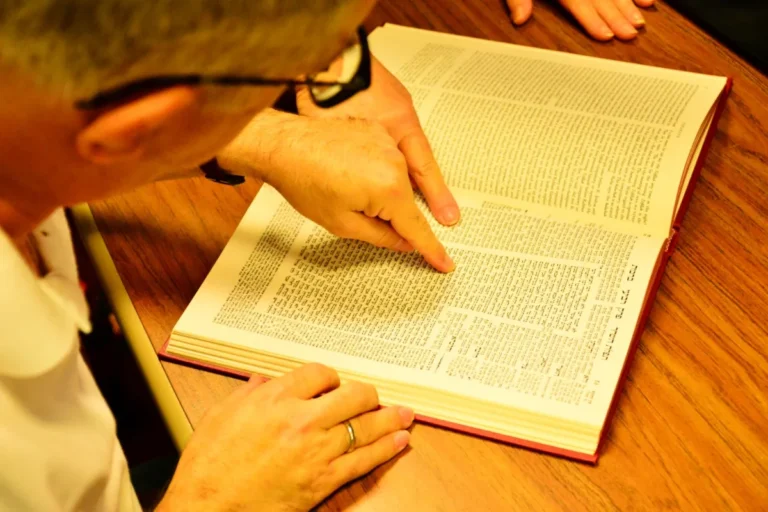
All classes are currently held virtually and are open to Rabbinic and Pararabbinic students, as well as auditing students from around the world.